Highlights of our Work
2026 | 2025 | 2024 | 2023 | 2022 | 2021 | 2020 | 2019 | 2018 | 2017 | 2016 | 2015 | 2014 | 2013 | 2012 | 2011 | 2010 | 2009 | 2008 | 2007 | 2006 | 2005 | 2004 | 2003 | 2002 | 2001
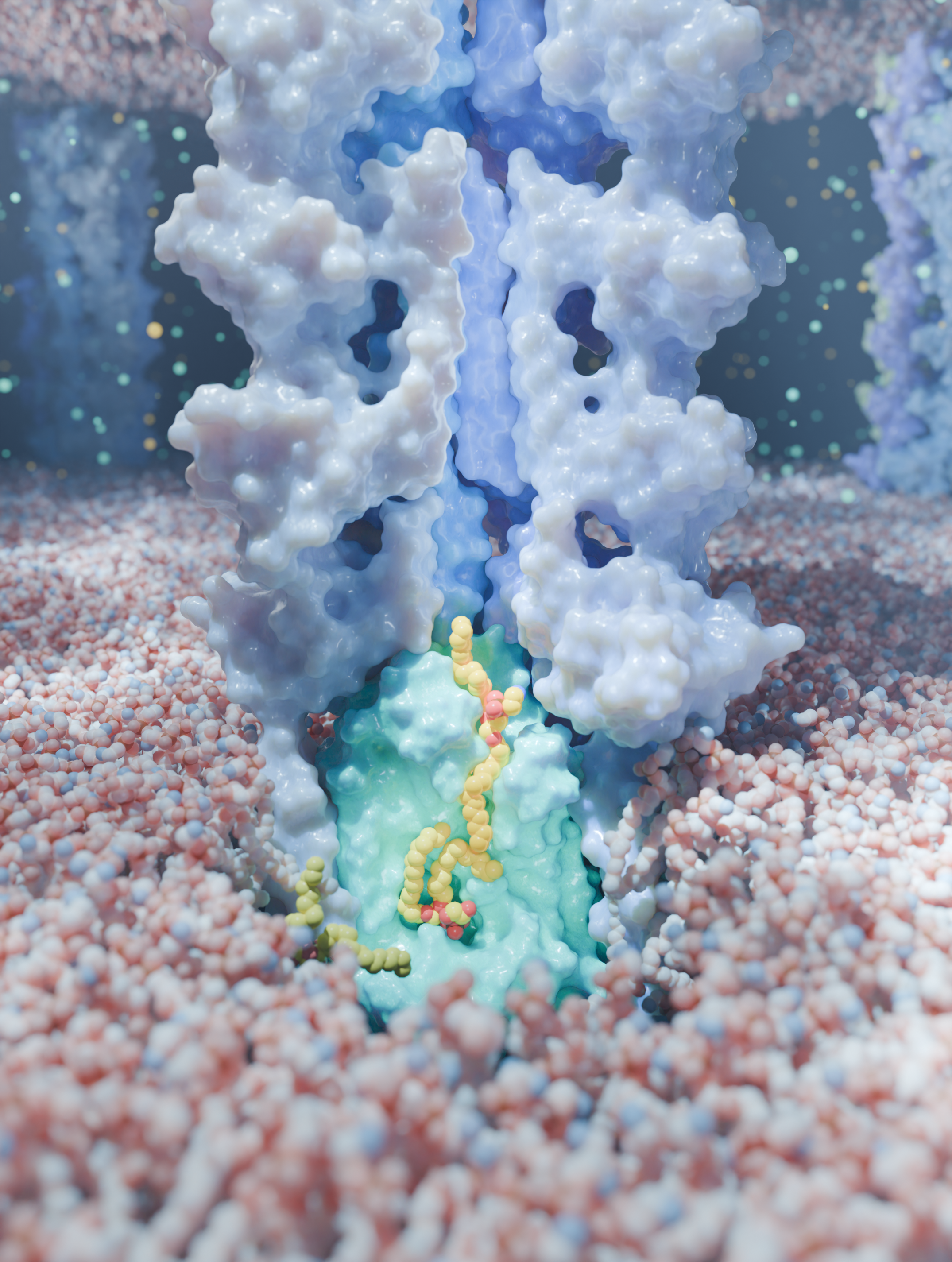
image size:
452.1KB
Gram-negative bacteria are often resistant to antibiotics, posing a major threat to human health. A key defense is their outer membrane, which acts as a protective barrier to keep many antibiotics out. To maintain this barrier, they use specialized proteins to transport lipids, the main membrane building blocks, from the inner membrane across the watery space to the outer membrane. How these proteins carry out this task remains poorly understood. In collaboration with the Bhabha/Ekiert lab at Hopkins, Resource researchers used molecular dynamics simulations with NAMD 3.0 to study LetAB, one of the protein systems involved in this process. They found that this process involves lifting lipids out of the inner membrane by LetA and transferring them to the tunnel protein LetB, aided by a positively charged amino acid. These findings help explain how bacteria move membrane building blocks to maintain their protective barrier and could guide new strategies to weaken this defense against antibiotics. More details are available in Nature.